Home / Insights on entering the Indian market
Five Lessons from Success and Failure Stories in Localizing for the Indian Market
2026.03.24
A population of more than 1.4 billion, diverse languages and religions, and region-by-region cultures and lifestyles — India is not a monolith but a "multi-layered market." For foreign companies to succeed locally, a "localization strategy" that goes beyond simple translation or product tweaks is essential. As of October 2024, 1,434 Japanese companies had entered India, and what separated the ones that succeeded from those forced to withdraw was the quality of their localization.
The Current State of India Market Entry and the Importance of Localization
India overtook China in 2023 to become the world's most populous country, and the IMF forecasts real GDP growth of 6.5-6.6% for 2025-26. The number of companies entering this huge, growing market keeps rising, but the success rate is far from high.
While Suzuki has achieved overwhelming success, capturing about 41% share of the Indian automobile market, many Japanese companies have been forced to withdraw or scale back. The biggest factor behind this difference is the quality and depth of their localization strategy.
Success Stories in Localizing for the Indian Market
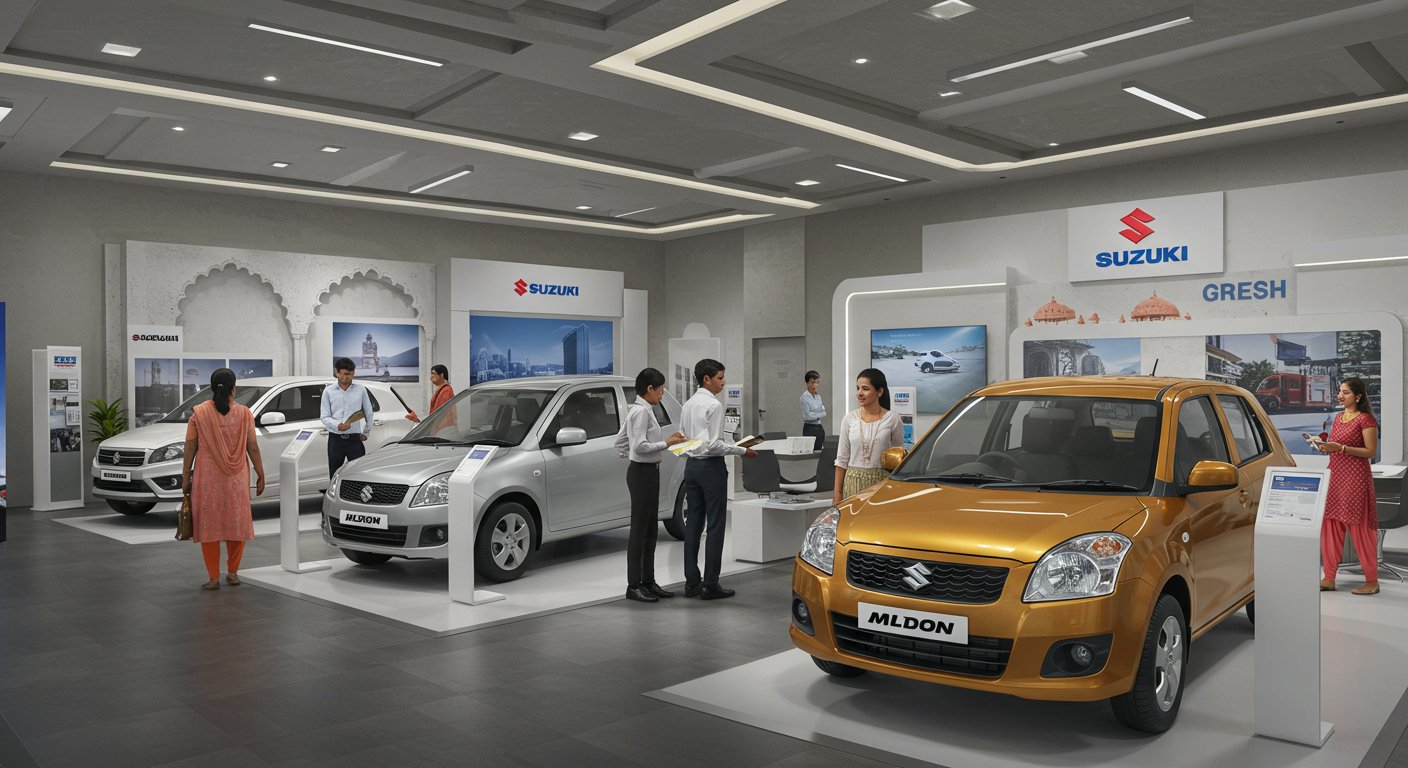
Suzuki: Achieving "Japanese Quality at Indian Prices"
At the core of Suzuki's success is a comprehensive overhaul, from product design to sales strategy, tailored to the characteristics of the Indian market. Developing compact cars suited to India's road conditions, strengthening air-conditioning performance for the local climate, and a relentless focus on the "cost performance" that Indian consumers value have all paid off. Building a nationwide dealership network and after-sales service system has further established the credibility of the "Maruti Suzuki" brand.
McDonald's: Religious Sensitivity and Menu Innovation
igious background and developed special menu items such as the beef-free "Maharaja Mac." It has also expanded its menu for vegetarian customers and completely separated its kitchens into vegetarian and Religious considerations thoroughly implementing these measures.
Daikin Industries: Optimizing for the Local Climate
Daikin develops products optimized for India's distinctive hot, humid climate and lifestyle, and has boosted its competitiveness by building a cooperative structure with local companies. It is a good example of "localization combined with quality" — offering products at price points suited to the Indian market while building on Japan's high-quality technology.
Failure Stories in Localizing for the Indian Market

An Appliance Maker's Failure from Ignoring Local Power Conditions
A major Japanese appliance maker launched a product that had succeeded in Japan directly into the Indian market as-is. However, because it was not designed to handle India's power conditions (frequent blackouts and voltage fluctuations), its failure rate was abnormally high, badly damaging the brand's image. This stands in contrast to South Korea's LG and Samsung, which expanded their market share by developing products tailored to India's power conditions.
The Failure of a High-Price Strategy
Many companies that brought in "expensive, high-quality" Japanese products as-is have struggled. In the Indian market, the balance between "sufficient functionality" and "affordable pricing" is what matters, and excessive features simply drive up costs unnecessarily. Understanding Indian consumers' price sensitivity — their preference to buy the cheapest option that will do — is essential.
Failures in Hiring and Organizational Culture
Many companies that brought in Japanese-style management as-is have struggled with friction with local staff and high turnover. India's top talent values opportunities for career advancement and participation in decision-making. Under a structure that merely executes instructions from headquarters, securing excellent talent is difficult.
Five Lessons: The Rules for Successfully Localizing in the Indian Market
Lesson 1: Design Pricing on "Indian Terms"
Rather than basing pricing on Japan, products need to be designed to fit the price range of the Indian market. Achieving "Japanese quality at Indian prices" requires using local raw materials and supply chains from the design stage.
Lesson 2: Reflect a Deep Understanding of Religion and Culture in Your Products
India's diverse religious and cultural backgrounds have a direct impact on product design and marketing. Health consciousness Understanding dietary taboos, vegetarian culture, and religious prohibitions, and reflecting them in products, is a prerequisite for success.
Lesson 3: Don't Neglect Region-by-Region Customization
India consists of 28 states and 8 union territories, and language, food culture, and consumer behavior differ greatly by region. Delhi and Chennai Even for the same product, different marketing approaches are needed depending on the region.
Lesson 4: Make the Most of Digital Channels
India's internet users have reached about 806 million, up 6.5% from the previous year. Instagram and YouTube influencer marketing is effective, and the digital adv
Lesson 5: Build a Collaborative Structure with Local Partners
Successful localization requires collaboration with Local partners who deeply understand the market. Effective localization is achieved by drawing on lo
How Japanese companies should respond
For successful localization in the Indian market, the following three points are especially important. First, adopting a "zero-based design" that assumes the Indian market from the product or service design stage. Second, delegating decision-making authority to talented local staff to enable a fast response to the market. Third, the latest trends in the Indian market staying constantly up to date and building a structure that can respond flexibly to change.
Frequently asked questions
- Does localization for the Indian market mean just translation or renaming products?
-
No, it refers to efforts that go far beyond simple translation or renaming. It is a comprehensive strategy that includes pricing design, consideration of religion and culture, region-by-region specification adjustments, and optimization for the local climate. The scope of full product redesigns and menu development illustrates just how deep this goes.
- Why do products that succeeded in Japan tend to fail when launched in India unchanged?
-
Because they do not match India's unique usage environment or sense of pricing. For example, there have been cases where products not designed to handle frequent blackouts and voltage fluctuations damaged a brand through high failure rates. This contrasted with competitors that gained market share by developing products suited to local power conditions.
- How should companies approach pricing design for India?
-
Rather than basing prices on Japan, companies need an India-first standard that designs products starting from the price range of the Indian market. Using local raw materials and supply chains from the design stage aims to achieve Japanese quality at Indian prices. Since excessive features drive up costs, striking a balance with sufficient functionality is key.
- Should India be treated as a single market?
-
India consists of numerous states and union territories and is a multi-layered market where language, food culture, and consumer behavior differ greatly by region. Even for the same product, Delhi and Chennai require different marketing approaches. Region-by-region customization is a given, rather than a single nationwide policy.
- What happens if Japanese-style management is applied to an Indian organization unchanged?
-
It tends to cause friction with local staff and high turnover. Because India's top talent values opportunities for career advancement and participation in decision-making, a structure that merely executes instructions from headquarters makes it hard to retain talent. Delegating authority to local staff is one of the conditions for successful localization.
- What should a company address first when reviewing its localization strategy?
-
We recommend starting by redesigning products and services from a zero base with the Indian market as the premise, and building a structure that delegates decision-making authority to local staff. It is also effective to partner with local partners who deeply understand the market and work on building sales networks and gathering consumer insights.
Sources
- JETRO, "The Competitive Environment in India: 80% of Japanese-Affiliated Companies Profitable" (2025)
- Digima, "Advantages and Disadvantages of Entering the Indian Market" (Latest, 2026)
- Indo Japan, "10 Japanese Companies That Succeeded in Entering India"
- IBEF"IMF projects Indian economy to grow at 6.6% in 2025-26"
- GDX, "India Digital Marketing Trends 2025"
MORE
Can Japanese products be placed on India's quick commerce?Will supermarkets in India stock Japanese products?Is wholesaling to India's ubiquitous kirana shops possible?Which malls in India are UNIQLO and MUJI in?Where does sales channel development in India start? How distribution works and how to choose a channelOrders placed in India do not arrive | How to find suppliers of ingredients and materials, and what to do about itSOJAPAN
We support Japanese companies entering India, from market research through local partner development, test sales, and import.