Home / Insights on entering the Indian market
What Is the Caste System? A Thorough Look at the Structure and History of India's Social Hierarchy
2026.03.24
India's caste system, a social hierarchy rooted in Hinduism, has shaped Indian society for thousands of years. Made up of a two-layer structure of "varna" and "jati," it influences everything from marriage and occupation to everyday interactions.
This article draws on firsthand experience living in India to explain the caste system's basic structure, its historical development, how it became fixed during the colonial era, post-independence reforms, and the realities of modern India. It also organizes the key points Japanese companies should know when doing business in India.
The Basic Structure of the Caste System
To understand the caste system, you need to grasp two concepts: "varna" and "jati." This two-layer structure forms the foundation of Indian society.
Varna: The Four Social Strata
Varna refers to the four basic status categories based on Hindu scripture. The word means "color" in Sanskrit, and it is said to originally derive from the difference in skin color between the conquering Aryans and the indigenous Dravidians.
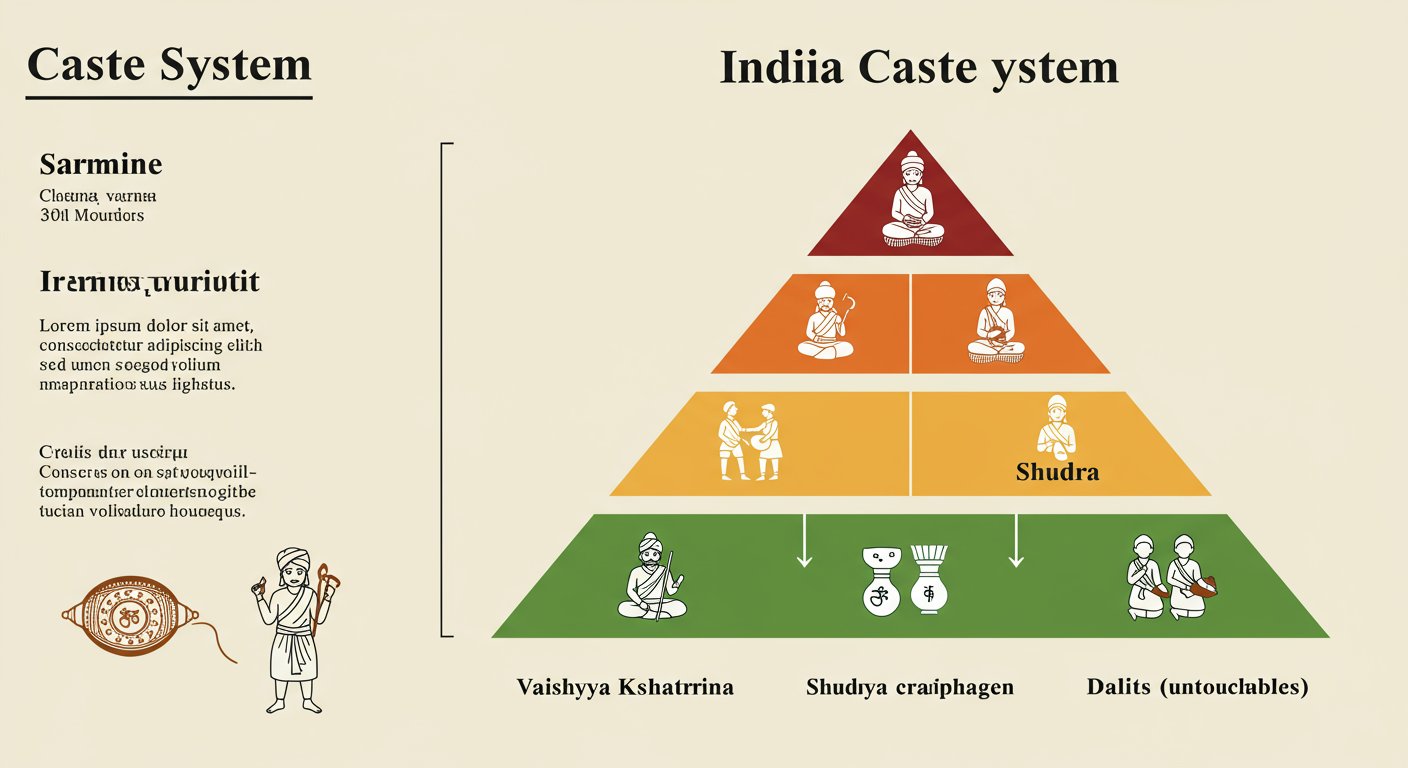
The four varnas originate from the "Purusha Sukta" hymn in the Rigveda, a scripture of Hinduism. Each stratum is said to have been born from the body of Purusha, the primordial being, and from the top they are divided as follows.
| Varna | Body part | Role | Common modern occupations |
|---|---|---|---|
| Brahmin | Mouth | Priests and scholars | Teachers, priests, lawyers |
| Kshatriya | Arms | Royalty and warriors | Military officers, administrators, politicians |
| Vaishya | Thighs | Merchants and farmers | Merchants, bankers, farm owners |
| Shudra | Feet | Laborers and servants | Artisans, agricultural laborers, service workers |
The reason Brahmins occupy the top position is not political or economic power but "purity." Brahmins, who avoided manual labor and devoted themselves to intellectual and religious pursuits, were considered the most "pure" beings. This principle of "pure and impure" is the basic logic running through the entire caste system.
Jati: Subdivision by Occupation
Whereas varna is a broad four-way division, jati refers to much more finely divided social groups. The word means "birth" in Sanskrit, and there are said to be 2,000-3,000 jatis across India.
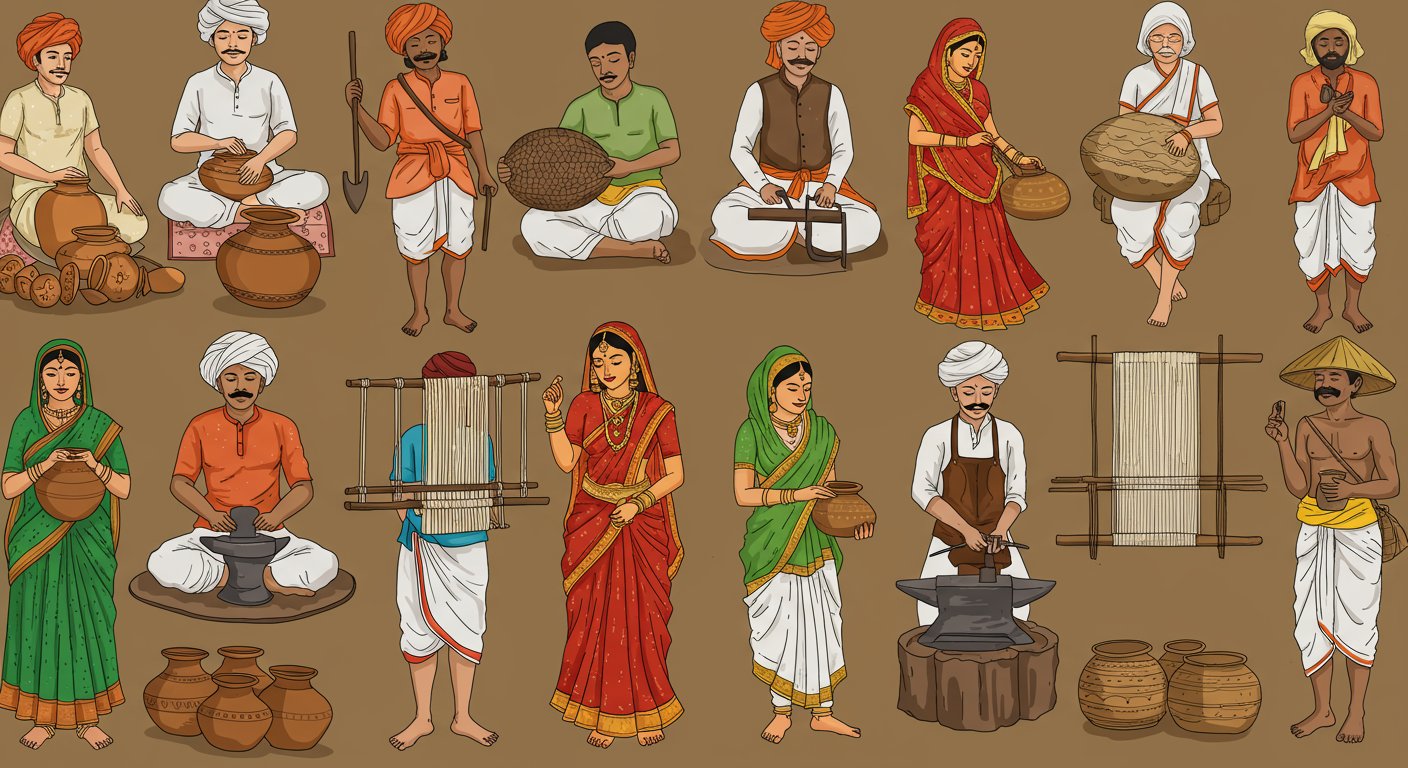
Jatis formed around occupations. People engaged in a particular trade, such as blacksmiths, potters, weavers, and leather workers, each formed their own distinct jati. Important features include heredity (children take up their parents' occupation) and endogamy (marrying only within the same jati).
Jati is not just an institutional category; it still functions in everyday life today. When looking for a marriage partner, it is common to choose someone from within the same jati, and jati is explicitly stated in newspaper matrimonial ads.
| Point of comparison | Varna | Jati |
|---|---|---|
| Number | 4 categories | 2,000–3,000 |
| Basis | Religious status | Occupation, kinship, region |
| Scope | Common across all of India | Differs by region |
| Origin | The scripture Rigveda | Formed around the 10th-12th centuries |
| Fluidity | An ideological framework | A group that functions in daily life |
The Position of Dalits (Untouchables)
Positioned outside the four varnas are the people called Dalits (untouchables). This term, meaning "the oppressed," was one that the people themselves began using. They were formerly also called "outcastes" or "Harijans" (children of God).
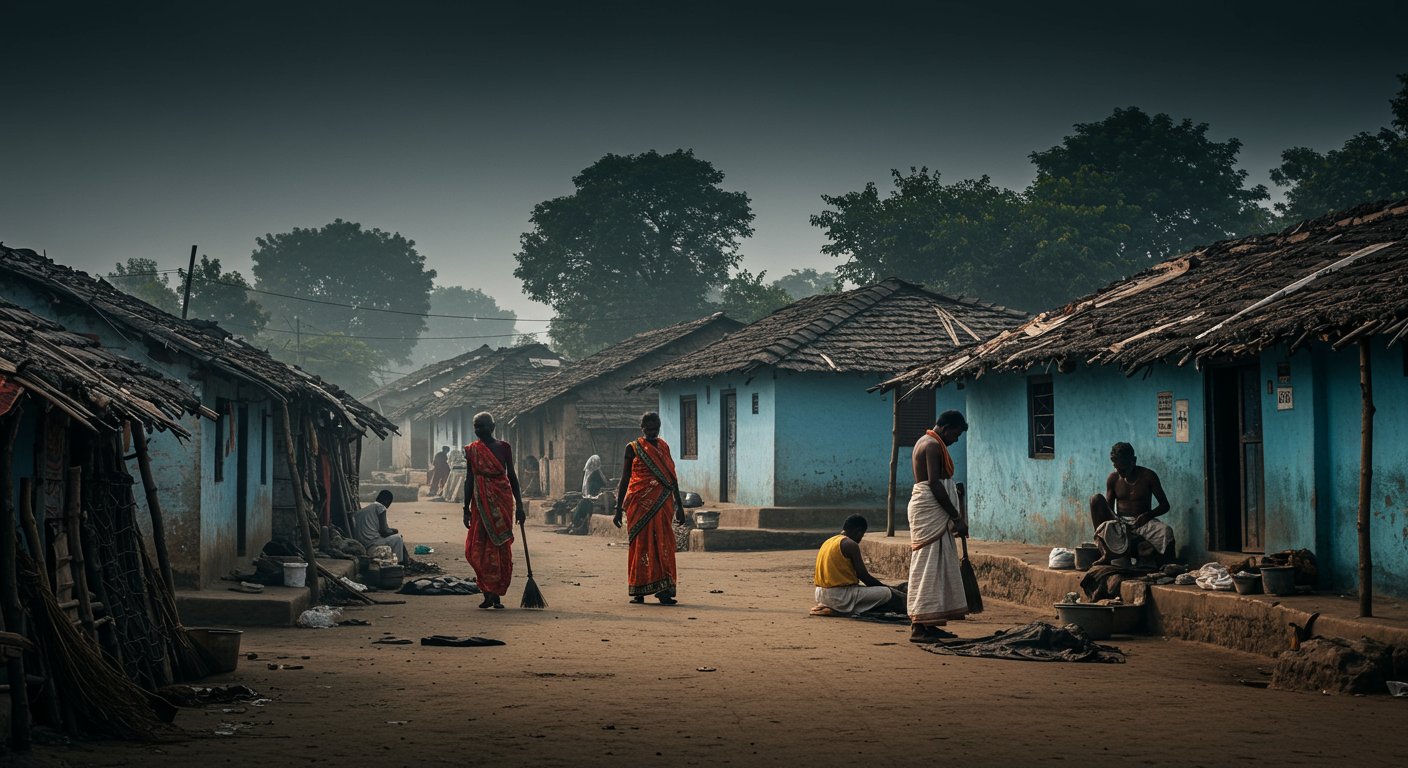
Dalits were assigned to work considered "impure" under Hindu belief, such as disposing of animal carcasses, processing leather, cleaning, and handling waste. They were made to live on the outskirts of villages and were barred from using public wells or entering temples. When walking down the road, they sometimes even had to take care that their shadow did not fall on a member of a higher caste.
Speaking with Dalits working as sanitation workers in India, they say they still sometimes face discriminatory treatment. Even now that discrimination is banned under the constitution, violent incidents against Dalits, especially in rural areas, have not stopped.
Of India's roughly 1.4 billion population, Dalits account for about 16.6%, or more than 200 million people. Considering that Brahmins make up only about 4.3%, it is clear that those positioned at the very bottom of the hierarchy vastly outnumber those at the top.
The History and Evolution of Caste
The caste system began forming around 1500 BCE and has continued to evolve for more than 3,500 years. Understanding this history is key to reading modern India's social structure.
The Aryan Migration and the Origins of Caste
According to the most widely accepted theory, around 1500 BCE a group speaking Indo-Aryan languages migrated from Central Asia, and the varna system formed through their intermingling with the indigenous Dravidian peoples. However, this "Aryan migration theory" is not without its critics, and academic debate continues.
In the early Vedic period, the divide began simply between conquerors and the conquered, and it eventually developed into the four-varna system. The word "varna" itself means "color," suggesting that differences in skin color were the basis for this early distinction.
The Manusmriti and the Fixing of the System
The Manusmriti (Laws of Manu), compiled around the 2nd century BCE to the 2nd century CE, was a crucial text that gave the caste system legal and religious legitimacy. It laid out detailed codes of conduct between castes and played a decisive role in fixing the system in place.
The Manusmriti set strict rules on contact, meals, and marriage between castes, and also recorded penalties for violations. Its existence transformed the caste system from a mere custom into a religious doctrine.
Anti-caste thought
Around the 5th century BCE, Buddhism and Jainism emerged as belief systems that rejected the caste system. Gautama Buddha, the founder of Buddhism, preached human equality and opposed caste-based discrimination. However, these movements could not fundamentally change Indian society, and the Hindu-based caste system continued to persist.
| Period | Event | Impact on caste |
|---|---|---|
| Around 1500 BCE | Migration of the Aryans | Emergence of the varna system |
| Around 1000 BCE | Compilation of the Vedic texts | Establishment of the four varnas |
| 5th century BCE | Emergence of Buddhism and Jainism | Rise of anti-caste thought |
| 2nd century BCE to 2nd century CE | Compilation of the Manusmriti | Codification and fixing of the system |
| 10th to 12th century | Formation of jati | Subdivision into occupational groups |
| 16th century | Arrival of the Portuguese | Emergence of the word "caste" |
| 18th to 20th century | British colonial rule | Fixed in place through the census |
| 1950 | India's constitution enacted | Introduction of anti-discrimination law and the reservation system |
Colonial rule and the fixing of the system
One aspect of caste history that tends to be overlooked is the impact of the British colonial era. Rule from the late 18th century to the mid-20th century fundamentally altered the system.
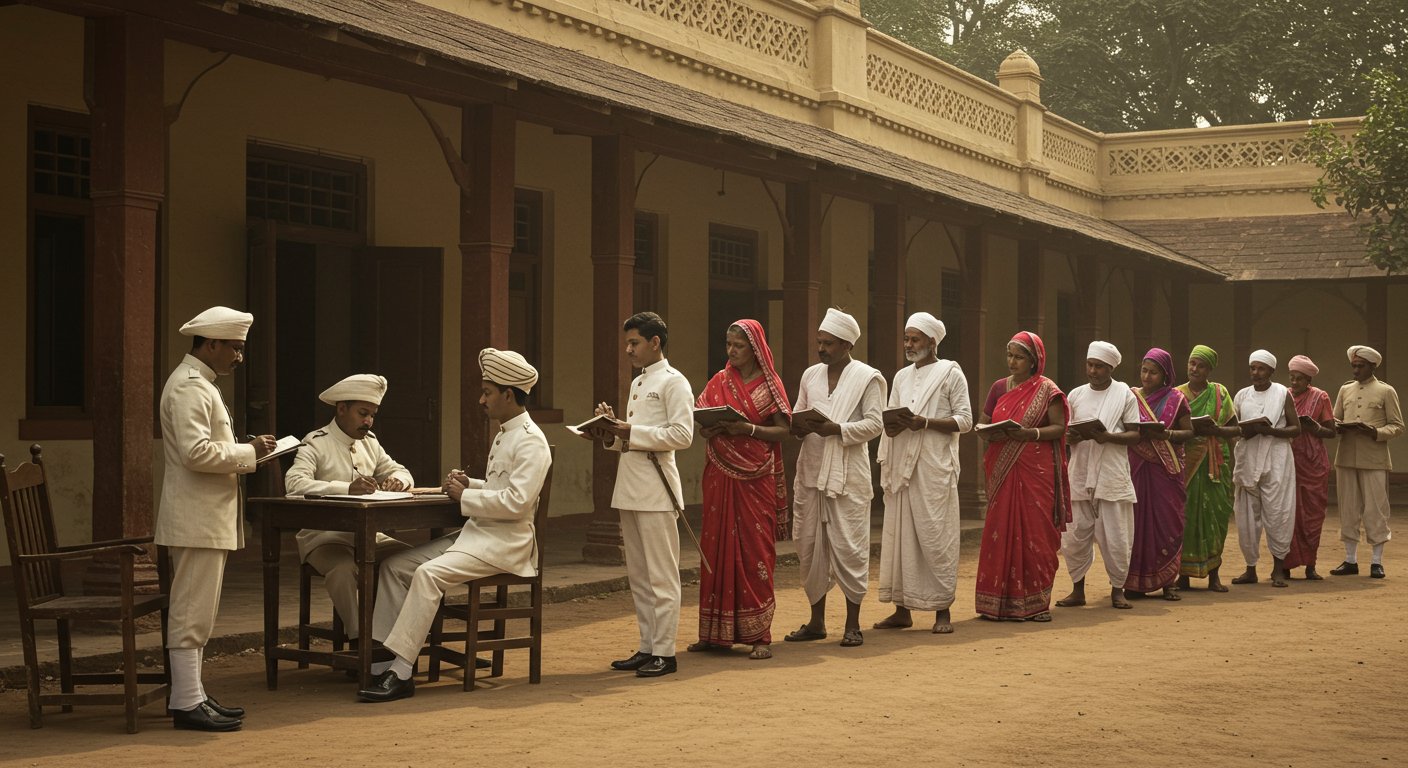
Classification and codification through the census
Britain needed to understand the realities of Indian society in order to govern it. Starting with the census in 1871, people were classified and recorded by caste, administratively fixing what had previously been a fluid system.
Before British rule, the caste system was, in fact, more flexible than is commonly believed. Some degree of movement between castes was possible, and practices varied by region. However, Britain's systematic classification efforts turned caste into an unchangeable "identity."
Divide and rule, and the political use of caste
Under its policy of "divide and rule," Britain deliberately exploited tensions between castes, and between Hindus and Muslims, to govern the country. It built caste into the administration and the army, and designated certain castes as "criminal tribes," treating them as inherently predisposed to crime and placing them under surveillance.
As a result, the caste system became part of the modern system of governance, growing more rigid and fixed than before. This colonial-era influence cannot be ignored when discussing caste issues today.
Post-independence reform and the reservation system
India's independence in 1947 marked a major turning point for the caste system as well. The drafting of the constitution advanced the legal abolition of discrimination and affirmative remedial measures.
Ambedkar and the drafting of the constitution
B.R. Ambedkar, the principal architect of the Indian Constitution, was himself of Dalit origin and strongly advocated for the abolition of caste discrimination. The Indian Constitution, enacted in 1950, declared the abolition of untouchability under Article 17 and banned caste-based discrimination.
In 1956, Ambedkar converted to Buddhism together with roughly 600,000 untouchables. Leaving Hinduism, which was bound up with the caste system, was a symbolic act aimed at spiritual liberation. This conversion movement continues today, with a large-scale conversion ceremony held every October in Nagpur.
The rift with Gandhi
There was a fundamental conflict between Gandhi and Ambedkar over how to address the caste issue. Gandhi called Dalits "Harijans" (children of God) and sought reform within the framework of Hinduism. Ambedkar, on the other hand, believed Hinduism itself was inseparable from the caste system and called for its complete abolition.
Under the Communal Award of 1932, Dalits were granted separate electorates, but Gandhi's hunger strike led to the Poona Pact, which converted separate electorates into reserved seats. This conflict symbolizes the fundamental debate between abolishing the system and reforming it from within.
How the reservation system works
The reservation system is a mechanism for securing opportunities in education, employment, and political participation for groups that have historically faced discrimination. It is known as a precursor to affirmative action in the United States.
| Target category | Abbreviation | Share of reserved seats | Example groups covered |
|---|---|---|---|
| Scheduled Castes | SC | About 15% | Former untouchables (Dalits) |
| Scheduled Tribes | ST | About 7.5% | Indigenous peoples (Adivasi) |
| Other Backward Classes | OBC | About 27% | Groups that are socially and educationally backward |
| Economically Weaker Sections | EWS | About 10% | Added by the 103rd Constitutional Amendment in 2019 (upheld by the Supreme Court in 2022) |
| Total | — | About 59.5% | For central government hiring and admissions |
The reservation system applies to admission quotas at educational institutions, government job postings, and legislative seats. While the system has achieved some success in correcting discrimination, it has also drawn criticism as "reverse discrimination" and sparked movements calling for its expansion, fueling intense debate in Indian society.
The reality in modern India
In modern India, caste discrimination is legally banned, but the social reality varies greatly by region and environment. As of 2026, a marked gap remains between urban and rural areas.
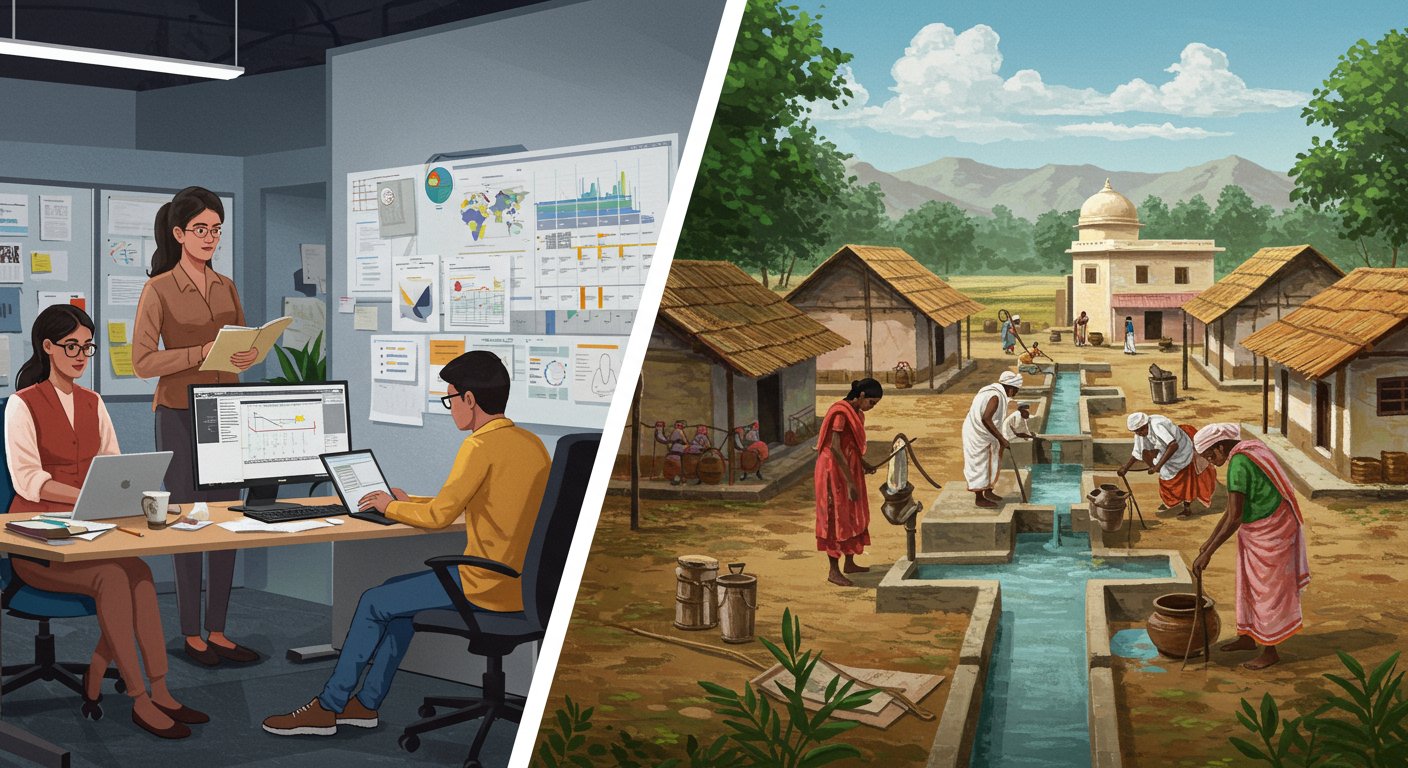
The urban-rural divide
In rural areas, the influence of caste remains strong, affecting residential segregation, restrictions on marriage partners, and limits on social interaction. In urban areas, by contrast, a meritocratic culture centered on the IT industry has taken hold, with education and skills tending to matter more than caste.
| Point of comparison | Urban areas | Rural areas |
|---|---|---|
| Occupational choice | Based on ability and education | Caste-based restrictions remain |
| Marriage | Intercaste marriage is on the rise | Marriage within the same caste remains the norm |
| Residence | Mixed-caste living is common | Caste-segregated neighborhoods remain |
| Dietary restrictions | Almost none | Restrictions on eating together across castes remain |
| Forms of discrimination | Invisible discrimination (hiring, renting) | Overt exclusion and violence |
Occupations once restricted to specific castes are now open to anyone, particularly in urban areas. Overt caste discrimination in public spaces has also declined.
Impact on marriage and occupational choice
In politics, caste remains an important factor. "Caste votes" carry weight in elections, and parties build support bases along caste lines. Parties representing lower castes and Dalits have also risen in prominence, and along with changes in India's demographic structure, they are gaining political influence.
In reality, caste is often still taken into account when looking for a marriage partner, even in urban areas. Matchmaking websites and apps still include a caste field, and caste's influence on marriage remains more deeply entrenched than its influence on occupational choice.
What a surname reveals about caste
In India, caste can often be inferred from a person's surname, which is also a source of invisible discrimination. This varies by region, but some representative examples are as follows.
| Example surname | Presumed caste | Region |
|---|---|---|
| Sharma, Mishra | Brahmin | Across North India |
| Singh, Rajput | Kshatriya | Rajasthan, Punjab |
| Gupta, Agarwal | Vaishya | Commercial cities of North India |
| Iyer, Iyengar | Brahmin | South India (Tamil Nadu) |
| Nair | Kshatriya-equivalent | Kerala |
Cases are still reported today of employers and landlords inferring caste from a surname on job applications or rental agreements and adjusting their treatment accordingly. A 2019 BBC-reported survey found that applicants with Dalit surnames received significantly fewer interview invitations than those with upper-caste surnames. To avoid this problem, some young people are changing their surnames or using names on their resumes that do not suggest a particular caste.
Nepal's caste system
The caste system exists not only in India but also in neighboring Nepal. In Nepal, where Hinduism was once the state religion, a system similar to India's developed in its own distinct form.
Similarities and differences with India
Nepal's caste system is also based on the four varna divisions, but it is less finely subdivided than in India, and it overlaps in complex ways with ethnic groups such as the Tibeto-Burman Gurung and Tamang peoples. Nepal has a history in which "high-caste hill Hindus" have occupied the center of political and economic life.
Nepal's current situation and legal status
Nepal's new constitution, enacted in 2015, bans caste discrimination and has also introduced a reservation system for Dalits. However, discrimination remains deeply entrenched, particularly in rural areas, and incidents such as restrictions on Dalits' use of public facilities and violent opposition to intercaste marriage have been reported.
Of Nepal's total population of about 30 million, Dalits make up roughly 13%. There is a gap between legal prohibition and social reality, and change is especially slow to reach remote mountainous areas. Because the India-Nepal border can be crossed freely, caste issues in the two countries influence each other.
What Japanese companies should know
The caste system still affects India's business environment today. For Japanese companies entering India, understanding caste is an essential practical matter. Hiring Talent in India and workplace management, Religious considerations also require careful understanding.
Handling the reservation system in hiring
Indian companies, particularly in the public sector, apply a reservation system for the SC/ST/OBC categories. Foreign-invested companies often have no direct legal obligation, but ensuring diversity has a direct bearing on corporate image and ESG evaluation. It is necessary to understand the categories covered by the reservation system and reflect them in hiring policy.
Points to watch in workplace management
Caste discrimination in the workplace is strictly prohibited by law. Japanese companies need to establish policies against caste-based harassment and conduct training. It is also important to pay attention to seating arrangements in cafeterias and team composition to ensure caste-based segregation does not arise unintentionally.
Implications for marketing strategy
India's middle class is expanding, and consumption behavior that crosses caste lines is spreading along with it. In particular, young people in urban areas are increasingly segmented by lifestyle and values rather than by caste, making Localization strategy marketing strategies that target diverse consumer segments effective.
| Area to address | Specific action | Risk |
|---|---|---|
| Recruitment | Securing talent from diverse backgrounds, understanding the reservation system | Litigation risk from biased hiring |
| Workplace environment | Establishing anti-discrimination policies, conducting training | Harassment issues, turnover |
| Marketing | Targeting that crosses caste lines | Risk of being seen as excluding specific groups |
| Partner selection | Understanding a partner's caste background | Friction in the business relationship |
For those considering entering the Indian market, we recommend deepening your understanding of Differences in business practices between India and Japan, and making use of A local partner you can trust expert insights.
カースト制度をめぐる素朴な疑問
Does the caste system still exist today?
Legally, Article 17 of the Indian Constitution abolished untouchability and banned caste-based discrimination. As a social practice, however, it persists, exerting a strong influence on marriage and social interaction, particularly in rural areas. Its influence tends to weaken in urban areas, but invisible discrimination based on surnames still remains.
What is the lowest caste?
The lowest of the four varnas is the Shudras (the laboring class), but beyond even that stand people known as Dalits (untouchables). Dalits are not included in the varna framework at all and have historically been engaged in occupations considered "impure." About 16.6% of India's population, more than 200 million people, are classified as Dalits.
Why hasn't the caste system disappeared?
It is a system that has been woven into religion, society, the economy, and politics for thousands of years, and it presents a structural problem that legal prohibition alone struggles to eradicate. Several forces act together to sustain the system, including the practice of endogamy in marriage, political interests tied to the reservation system, and caste-based voting behavior.
Can caste be inferred from a surname in India?
In many cases, caste and region of origin can be inferred from a surname. Sharma and Mishra are common among Brahmins, Singh and Rajput among Kshatriyas, and Gupta and Agarwal among Vaishyas. That said, there are regional differences, and this does not hold true in every case.
Did Japan ever have a system similar to caste?
The Edo-period shinokosho status order and the burakumin question have points in common with the caste system. The discrimination faced by Dalits and the discrimination faced by burakumin share a structure in particular: both turn on the circumstances of a person's birth. Aya Ikegame, an anthropologist at the University of Tokyo, has pointed to this parallel, and comparative work on discrimination in Japan and India is progressing.
Frequently asked questions
- What is the difference between varna and jati in the caste system?
-
Varna is a broad, four-tier classification based on Hindu scripture, dividing people into Brahmin, Kshatriya, Vaishya, and Shudra, and it is common across all of India. Jati, on the other hand, are social groups formed around occupation, lineage, and region, and they differ from place to place. Characterized by heredity and endogamy, jati function as the units that operate in everyday life.
- Where do Dalits (untouchables) fit within the caste system?
-
Dalits are people positioned outside the four varnas, and the term means "the oppressed." They have a history of engaging in occupations considered impure. They are said to make up a significant share of India's population, and even now, with discrimination banned under the constitution, discrimination remains, particularly in rural areas.
- How did the caste system change during British colonial rule?
-
Before British rule, the caste system was more flexible than is commonly believed, and some degree of movement was possible. However, classifying and recording people by caste through the census administratively fixed what had been a fluid system. Under the policy of divide and rule, caste was put to political use, transforming it into a stricter system.
- How were remedial measures against caste discrimination introduced after independence?
-
The Indian Constitution declared the abolition of untouchability and banned caste-based discrimination. In addition, the reservation system was introduced to secure opportunities in education, employment, and political participation for groups that had historically faced discrimination, with quotas set for Scheduled Castes, Scheduled Tribes, and Other Backward Classes. Ambedkar, the constitution's drafter, was himself of Dalit origin.
- How much influence does caste still have in modern India?
-
In urban areas, meritocracy has taken hold, centered on the IT industry, with education and skills tending to matter more than caste. In rural areas, by contrast, the influence of caste remains strong, affecting residential segregation and restrictions on marriage partners. Caste is often still taken into account when choosing a marriage partner even in urban areas, and invisible discrimination has also been pointed out.
- How should Japanese companies handle caste issues in practice in India?
-
In recruitment, the reservation system applies mainly in the public sector, so it is important to understand how it works and reflect it in hiring policy. In the workplace, develop policies to prevent caste-based harassment and provide training, and watch for any unintended segregation. In marketing, targeting strategies that cross caste lines are effective.
Conclusion
India's caste system is a social structure with more than 3,500 years of history, and understanding it is essential to understanding modern India. Let's review the key points of this article.
- The caste system consists of a two-layer structure: "varna" (four status groups) and "jati" (2,000 to 3,000 occupational groups)
- It originated with the migration of the Aryans around 1500 BCE and was codified in the Manusmriti
- The census taken during British colonial rule fixed in place a system that had once been fluid
- The 1950 Constitution of India banned discrimination and introduced the reservation system (a combined quota of about 49.5% for SC, ST, and OBC). A 10% EWS quota was added in 2019, bringing the central government total to about 59.5%
- Today, its influence has weakened in urban areas, but discrimination through marriage, politics, and surnames remains deeply entrenched
- A similar system exists in Nepal as well, making it a shared social challenge across South Asia
- Japanese companies need to address three areas when entering India: the reservation system, workplace management, and marketing
Knowledge of the caste system is an important factor in avoiding Failures in entering the India market. Expansion into Tier 2 cities, and other topics, we encourage anyone involved in business in India to deepen their understanding of this complex social structure.
[References and sources]
This article is based on the following publicly available information.
-Ministry of Foreign Affairs of Japan, "Basic Data on India"
-JETRO, "India Overview"
-Institute of Developing Economies, "India's Caste System and Politics"
-Government of India"Constitution of India"
-Census of India
-National Human Rights Commission of India
-Wikipedia"Caste system in India"
-Wikipedia"B.R. Ambedkar"
MORE
Can Japanese products be placed on India's quick commerce?Will supermarkets in India stock Japanese products?Is wholesaling to India's ubiquitous kirana shops possible?Which malls in India are UNIQLO and MUJI in?Where does sales channel development in India start? How distribution works and how to choose a channelOrders placed in India do not arrive | How to find suppliers of ingredients and materials, and what to do about itSOJAPAN
We support Japanese companies entering India, from market research through local partner development, test sales, and import.