Home / Insights on entering the Indian market
World Economic Map for 2030: 10 Growth Countries to Watch
2026.03.24
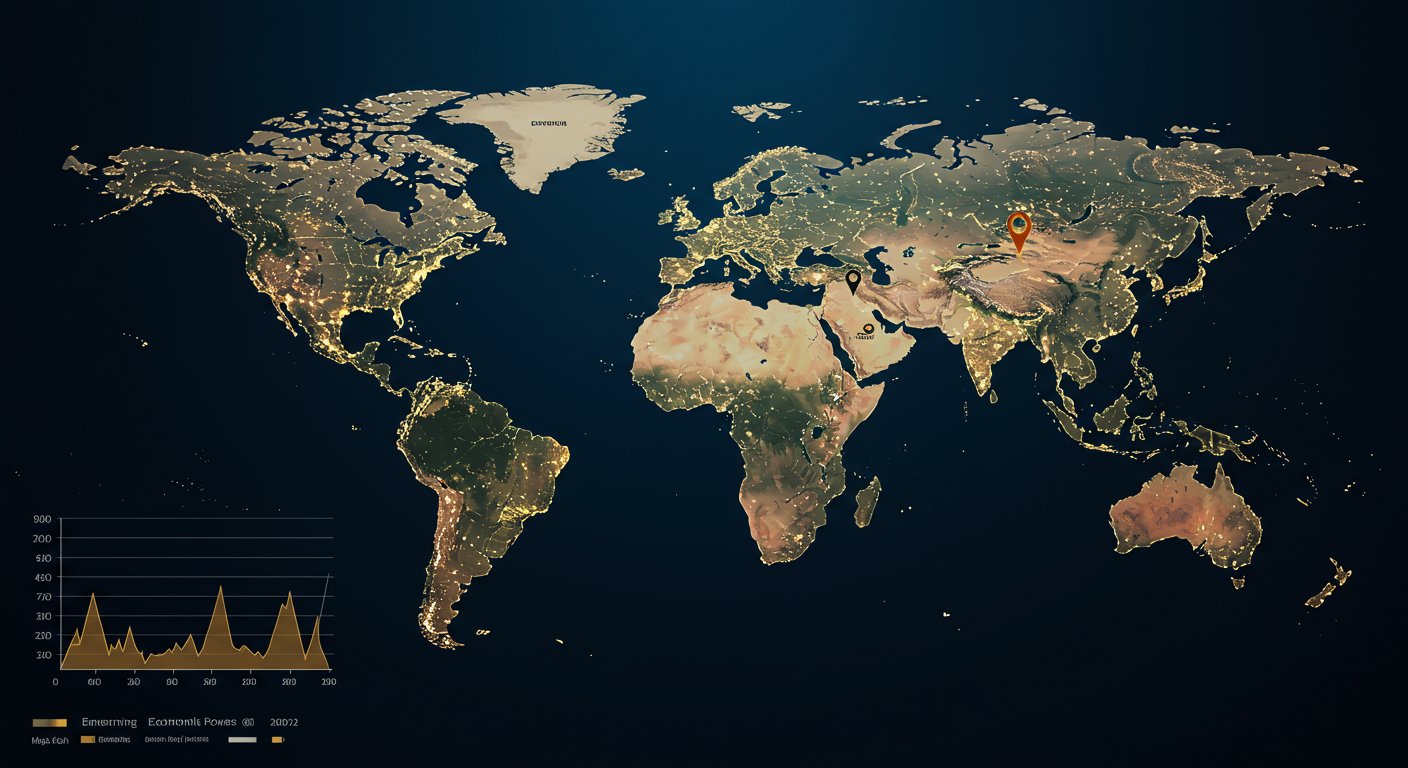
The global economic landscape is being redrawn at an unprecedented pace. According to the IMF's October 2025 forecast, overall global growth is 3.2%. Among emerging economies alone, however, growth reaches 4.2%, far outpacing the 1.6% of advanced economies. This article focuses on the "next 10 countries" whose presence is growing toward 2030, explaining each country's strengths and the business opportunities they offer Japanese companies.
How Will the World Economic Landscape Change by 2030?
According to the IMF's October 2025 World Economic Outlook, global GDP growth is expected to slow to 3.1% in 2026. Emerging and developing economies, however, are projected to grow 4.2%, a wide gap from the 1.6% expected for advanced economies.
The OECD's December 2025 economic outlook also forecasts a recovery trend through 2027, with emerging economies in Asia, the Middle East, Africa, and Latin America serving as the growth engine. Three megatrends -- demographic dividends, accelerating digitalization, and supply chain realignment -- are driving the rise of these countries.
Asia's Giants: China and India
China and India cannot be overlooked when discussing the global economy in 2030.
中国は購買力平価(PPP)ベースで世界最大の経済規模を維持する見通しですが、成長率は鈍化傾向にあり、IMFは2025年の実質成長率を4.8%と見込んでいます(2025年10月時点)。不動産市場の調整、人口減少、米中貿易摩擦が構造的な課題です。
Meanwhile, the IMF forecasts India to grow 6.5-6.6% in 2025-26, maintaining the highest growth rate among major economies. In 2025, India overtook Japan in nominal GDP to become the world's 4th largest economy (IMF, NITI Aayog, 2025). The focus now is whether India can overtake Germany to reach 3rd place. India is considered a major driver of global GDP growth, accounting for about 17% of it in 2026 (with China as the largest contributor).
India's strengths lie in its population of over 1.4 billion, its young workforce, digital public infrastructure built on the world's largest biometric ID system "Aadhaar," and its concentration of IT industries. Payment transactions via UPI (Unified Payments Interface) exceed 22 billion per month (2026), reflecting a rapid shift toward a digital economy.

Differences Between China's and India's Growth Models
China is shifting from manufacturing-led export growth toward domestic demand- and technology-driven qualitative growth. India, meanwhile, is building on its IT and services industries while strengthening manufacturing through the "Make in India" policy. As China's growth rate slows into the 4% range while India is projected to maintain growth in the 6% range, the gap in economic scale between the two countries is expected to gradually narrow.
The Rise of Southeast Asia: Indonesia, Vietnam, and the Philippines
In Southeast Asia, Indonesia, Vietnam, and the Philippines are drawing particular attention.
Indonesia is Southeast Asia's largest economy with a population of 270 million, and is projected by some forecasts to become the world's 4th largest economy by 2050. Its abundant nickel resources are directly linked to EV battery demand, raising its strategic value. Rapid adoption of digital payments is also accelerating growth.
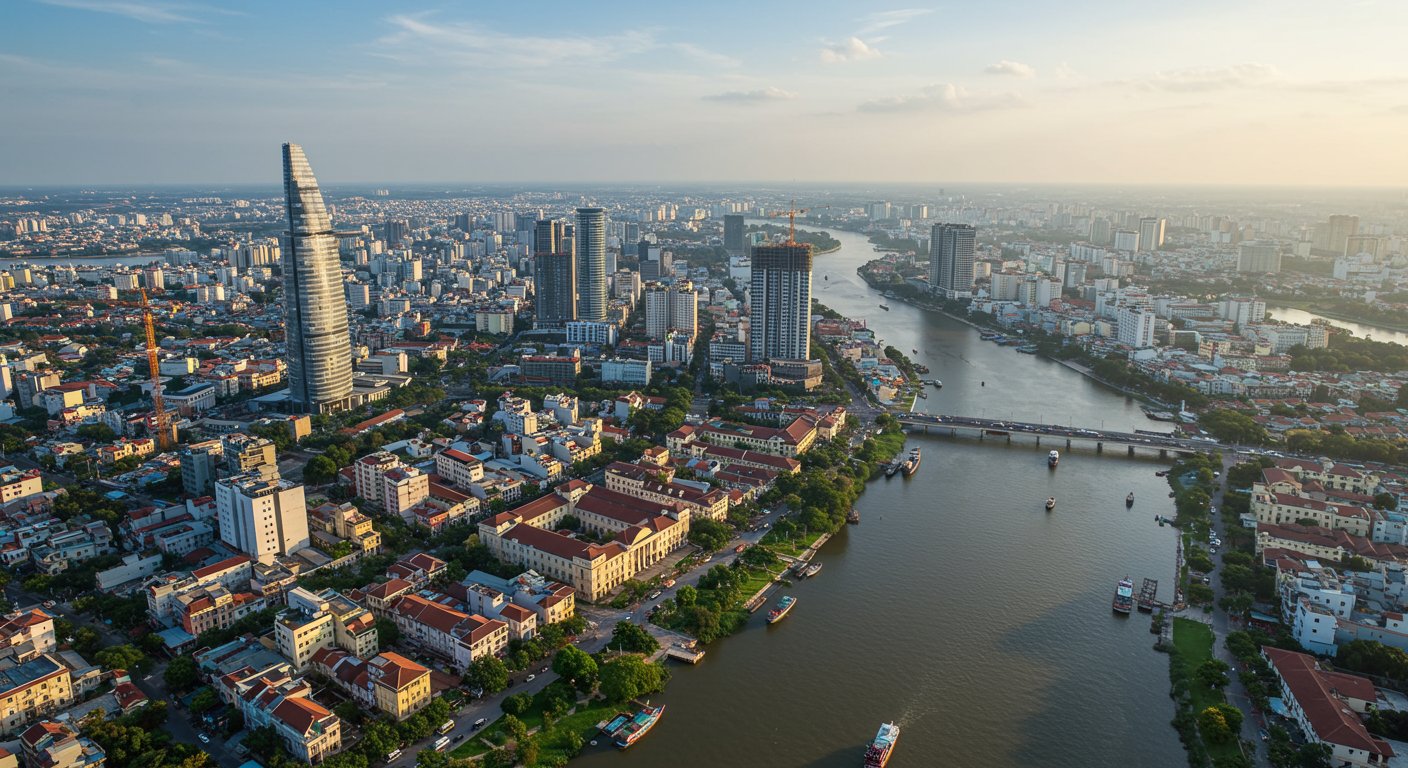
Vietnam is one of the biggest beneficiaries of the "China Plus One" strategy. World Bank data shows an average growth rate of about 5.1% over the past five years, with global companies such as Samsung, Intel, and LG making large-scale investments. Vietnam continues to focus on developing high-tech industries toward 2030.
The Philippines has established itself as a global hub for the BPO (business process outsourcing) industry, leveraging a population of over 110 million and strong English proficiency.
Strategic Value as a Destination for Manufacturing Shifts
Amid US-China tensions and supply chain realignment, Vietnam and the Philippines are gaining importance as destinations for relocated manufacturing. Both countries aim to move from low-cost production bases toward higher value-added industries, making them attractive destinations for Japanese companies as both "production bases" and "consumer markets."
Rising Stars in the Middle East and Africa: Saudi Arabia and Nigeria
Saudi Arabia is pursuing a move away from oil dependence under "Vision 2030." IMF forecasts put its PPP-based GDP at about $2.7 trillion by 2030. The female labor force participation rate has more than doubled, from 17% in 2016 to 37% in 2023, as social reforms accelerate. Large-scale investment in renewable energy, tourism, and entertainment is supporting growth.
Nigeria has Africa's largest population (over 220 million) and a vibrant startup ecosystem. PwC forecasts its PPP-based GDP will reach $1.8 trillion by 2030, and the fintech sector has produced several unicorn companies.

Moving Away from Resource Dependence Toward Economic Diversification
Both countries share an economic diversification strategy aimed at moving away from dependence on natural resources. Saudi Arabia is leveraging one of the world's largest sovereign wealth funds to concentrate investment in technology, tourism, and renewable energy, while Nigeria has made the digital economy and fintech pillars of its growth. Despite challenges such as political stability and infrastructure development, both are seen as having high growth potential thanks to their young populations and abundant resources.
Growth Stocks in Latin America: Brazil and Mexico
Brazil is projected to reach a PPP-based GDP of $4.4 trillion by 2030, becoming the world's 8th largest economy. It is a major agricultural power while also having developed aircraft manufacturing and automotive industries, and it leads the world in biofuel technology.
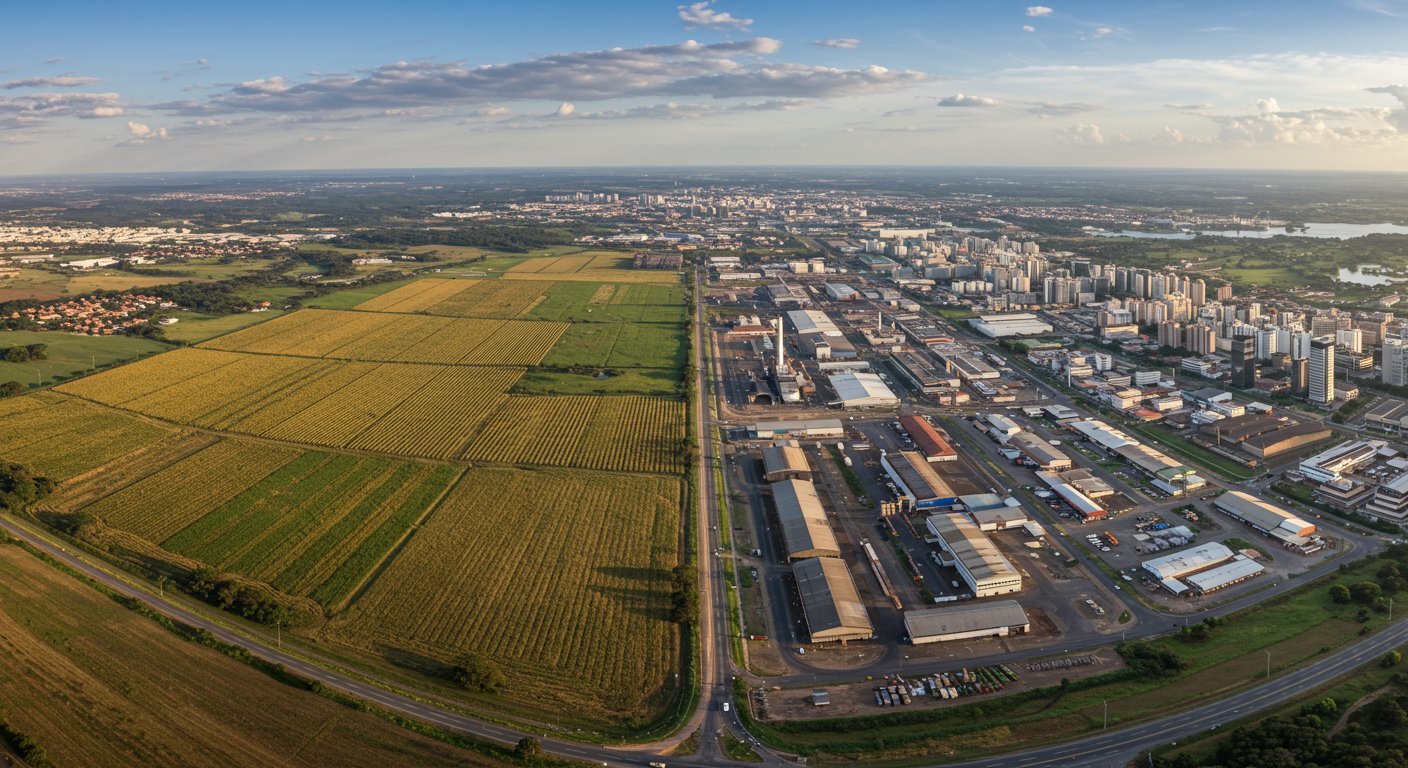
Mexico is rapidly strengthening its position as a manufacturing hub, leveraging its geographic proximity to the United States and the USMCA (United States-Mexico-Canada Agreement). It is forecast to reach a PPP-based GDP of $3.7 trillion by 2030, becoming the world's 9th largest economy. Many automakers, including Tesla, are expanding production in Mexico, which is also functioning as a destination for "China Plus One" strategies.
Europe's Ones to Watch: Poland and Turkey
Poland is one of the fastest-growing economies in the EU. It combines a high level of education with cost competitiveness and is deeply embedded in the supply chains of German companies. Many multinational corporations have established R&D centers and shared service centers there.
Turkey with its geopolitical position at the junction of Europe and Asia and a population of about 85 million, is noted in PwC's long-term forecasts as potentially surpassing Italy in economic size by 2030. However, it faces structural challenges of high inflation and a weak lira, and overcoming these will be key to its growth.

Emerging Forces in Africa: Egypt and Ethiopia
Egypt occupies a geopolitically strategic position with the Suez Canal, and its PPP-based GDP is expected to exceed $2 trillion by 2030. A young population, with more than 60% under age 30, will drive long-term growth.
Ethiopia is one of Africa's fastest-growing economies, with a population of over 115 million. The creation of the African Continental Free Trade Area (AfCFTA) is forming a single market of 1.3 billion people, with Egypt and Ethiopia at its core.
How Should Japanese Companies Act: Strategic Recommendations Toward 2030
The rise of these 10 countries creates major business opportunities for Japanese companies across three dimensions: "market," "production base," and "innovation partner." So how should companies act concretely?
1. Position India as the "Most Important Market"
India, which overtook Japan in nominal GDP to become the world's fourth-largest economy in 2025, is no longer a "promising future market" but a "massive market to enter right now." A consumption market of 1.4 billion people, high growth in the 6% range, and robust digital infrastructure — making the most of these calls for product development tailored to local needs and Localization strategy is essential.
2. Accelerate the Execution of "China Plus One"
Diversifying production bases across Vietnam, Indonesia, and Mexico is a two-birds-one-stone strategy that reduces supply chain risk while opening new markets. Vietnam in particular has a strong track record of Japanese companies entering the market, giving it the advantage of relatively low entry barriers.
3. Learn Digital Strategy from Emerging Economies
Digital services in emerging economies -- such as India's UPI, Indonesia's Gojek, and Nigeria's fintech sector -- are increasingly surpassing those of advanced economies. digital payments and startups, Japanese companies should also accelerate their own digital transformation.
4. Strengthen Collaboration with Local Partners
In emerging economies where culture and business practices differ greatly, A local partner you can trust is key to success. What is needed is not merely a sales agent but the building of a strategic partnership.
Conclusion: Turning Change into Opportunity
The world economic map of 2030 will look very different from today. Centered on the two economic giants of China and India, emerging economies in Southeast Asia, the Middle East, Africa, and Latin America will grow in presence, further advancing the multipolarization of the global economy.
What matters for Japanese companies is viewing this structural change not as a "threat" but as a "growth opportunity." Early entry into countries in their demographic dividend phase, the use of digital technology, and thorough localization -- companies that can execute on these will be the ones to survive in the global market of 2030.
For companies considering entry into the Indian market, our India market entry support service is available to help. We provide full support for your first step into this vast market of 1.4 billion people.
Frequently asked questions
- Why is attention focused on emerging economies?
-
Because the growth rate of emerging and developing economies far exceeds that of advanced economies. Three megatrends -- demographic dividends, accelerating digitalization, and supply chain realignment -- are driving the rise of these countries. Asia, the Middle East, Africa, and Latin America are seen as the growth engines.
- How do China's and India's growth models differ?
-
China is shifting from manufacturing-led export growth toward domestic demand- and technology-driven qualitative growth. India, meanwhile, is building on its IT and services industries while strengthening manufacturing through the Make in India policy. While China's growth rate is trending downward, India is projected to maintain a high level of growth.
- Which countries are promising destinations for the "China Plus One" strategy?
-
Vietnam, Indonesia, and Mexico are examples. Vietnam has received large-scale investment and has a strong track record of Japanese companies entering the market, while Mexico is strengthening its position as a manufacturing hub centered on automobiles by leveraging its proximity to the United States and trade agreements.
- What characteristics do emerging economies in the Middle East and Africa share?
-
Saudi Arabia is moving away from oil dependence under its national vision, investing in renewable energy, tourism, and entertainment. Nigeria has a large population and an active fintech sector. Both countries share a common strategy of economic diversification away from resource dependence.
- What does the rise of these emerging economies mean for Japanese companies?
-
It creates business opportunities across three dimensions: market, production base, and innovation partner. Early entry into countries in their demographic dividend phase, learning from digital services in emerging economies, and strengthening collaboration with local partners are all required. It is important to view this structural change as a growth opportunity rather than a threat.
- Among the many growth countries, where should Japanese companies prioritize?
-
India, with its huge consumer market and high growth, is positioned as one of the most important markets. To take advantage of its huge consumer market, high growth, and well-developed digital infrastructure, product development tailored to local needs and localization strategies are essential. A realistic approach is to compare your company's strengths against each country's characteristics and narrow down entry destinations in stages.
Sources
MORE
Can Japanese products be placed on India's quick commerce?Will supermarkets in India stock Japanese products?Is wholesaling to India's ubiquitous kirana shops possible?Which malls in India are UNIQLO and MUJI in?Where does sales channel development in India start? How distribution works and how to choose a channelOrders placed in India do not arrive | How to find suppliers of ingredients and materials, and what to do about itSOJAPAN
We support Japanese companies entering India, from market research through local partner development, test sales, and import.