Home / Insights on entering the Indian market
Choosing a Home for an India Posting | A Thorough Guide to Safe Areas and Contract Precautions
2026.03.24
The Challenge of Choosing a Home During an India Posting
The moment a posting to India is decided, one of the first questions many people face is where to live. Amid living conditions, safety, and infrastructure that differ greatly from Japan, whether you can find housing where you and your family can live with peace of mind has a major impact on the quality of life in India.
Especially when bringing your family along, the number of things to consider grows all at once: your children's educational environment, access to medical facilities, and the availability of Japanese food ingredients. The criteria you should choose by are fundamentally different from a single posting.
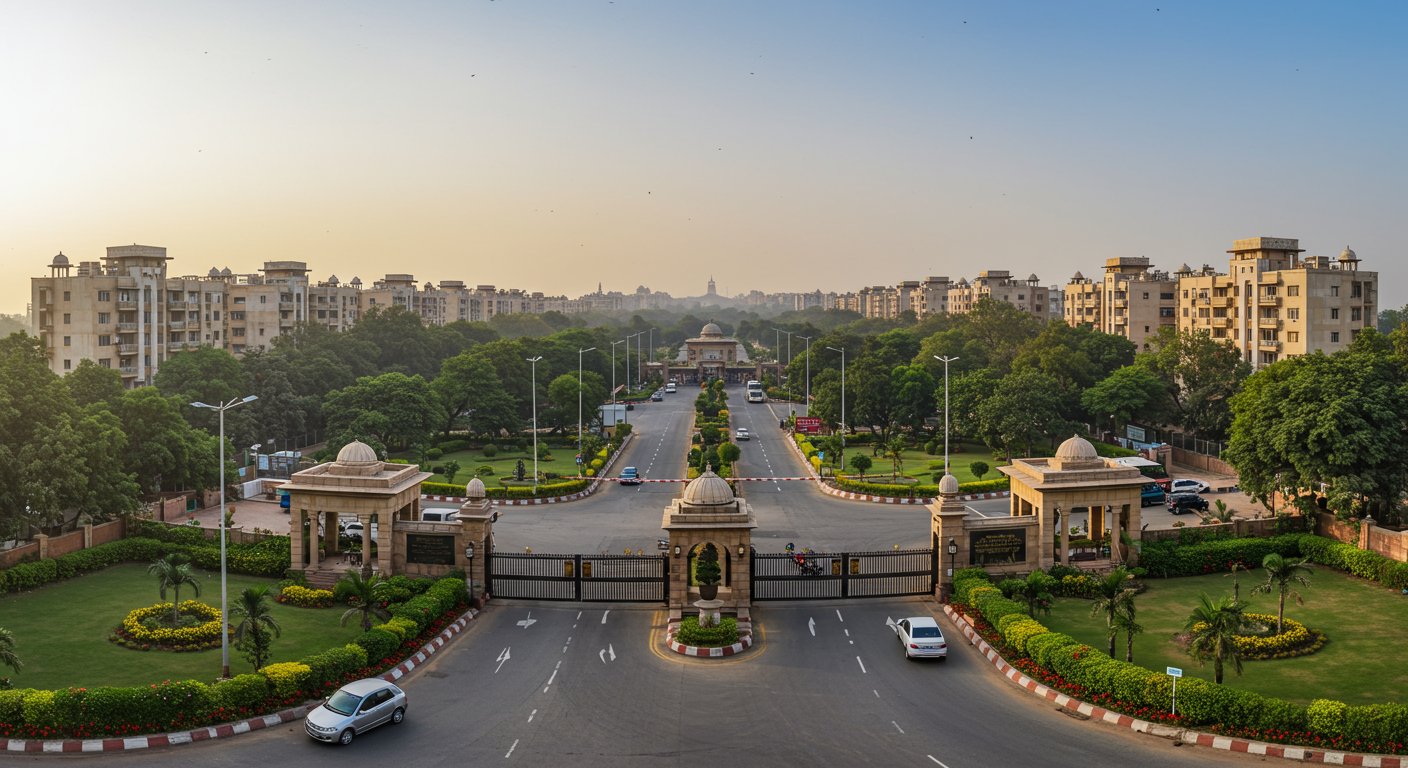
India's major cities have residential areas that have developed for foreign expatriates, offering an environment with solid security and living infrastructure. However, rent levels and contract customs differ greatly from Japan, and not knowing them can lead to costly expenses or unexpected trouble.
Which areas are safe? What should you watch for when signing a lease? This article answers these questions based on publicly available rent data and local leasing practices.
Safe Areas Popular with Japanese Expatriates
India's major cities have several areas with good security that are popular with Japanese expatriates. Especially when bringing your family, safety should be your top priority.
In the Delhi National Capital Region (NCR), the following areas are especially popular among Japanese families. Let's look at the characteristics and rent levels of each.
Vasant Vihar
Home to many diplomats, this is one of the most prestigious residential areas in Delhi. It is adjacent to the Embassy of Japan and the official residences of Western embassies, has plenty of greenery, and is very safe.
Access to Japanese food ingredients and restaurants is also good, and it remains consistently popular with Japanese expatriates. It is especially ideal for those who prioritize access to the Embassy of Japan or the Japanese school.

Typical rent: 150,000-300,000 rupees per month (approximately 260,000-510,000 yen) for a 2LDK to 3LDK, and 300,000 rupees (approximately 510,000 yen) or more for a standalone house.
Anand Niketan
This is an upscale residential area that is also extremely popular with Japanese residents. Many diplomats and wealthy residents live here, and its appeal lies in its good security, calm environment, and high level of privacy.
Located in South Delhi, it also offers good access to the Japanese school and malls. It is especially well suited to families who prioritize a safe, quiet environment above all, or those who want a home with a garden and more space.
Rent range: 300,000 to 600,000 rupees per month (about ¥520,000 to ¥1,040,000) for a standalone house. Apartments are relatively scarce in this area.
Popular Areas in Gurugram
Gurugram, on the outskirts of Delhi, is another area where many Japanese companies have set up operations in recent years, increasing the number of expatriates there. Along Golf Course Road in particular, spacious roads and a refined streetscape combine with extensive school bus routes, and there are also upscale malls dotted around that are convenient for family shopping.
What matters most for families raising children is the presence of parks and shared spaces where kids can play safely. A playground within the condominium grounds is a valuable feature, and properties with shared facilities such as soccer or basketball courts are also popular.
Points to Note When Signing a Rental Contract
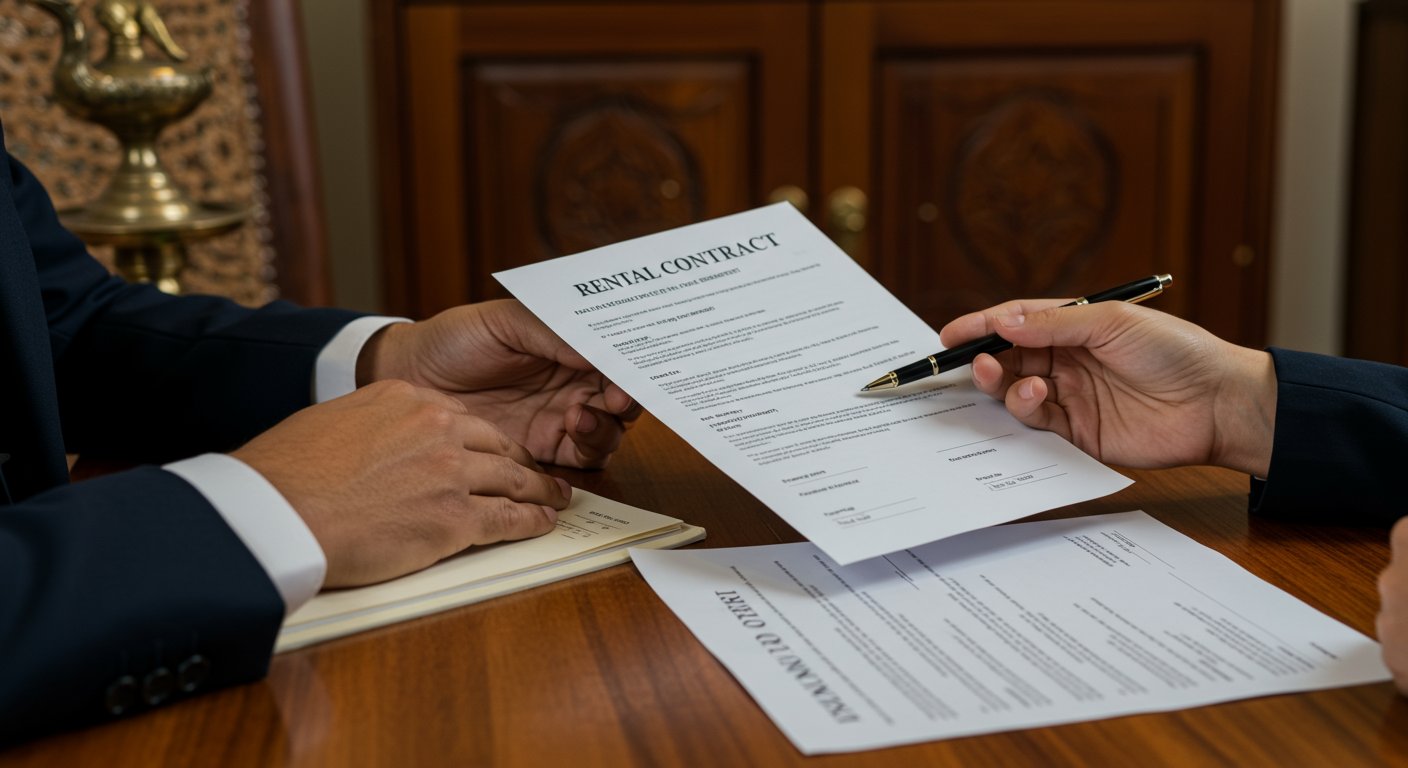
There are several customs and points of caution that differ from Japan when signing a rental contract in India. Knowing them in advance can help you avoid trouble later on.
Lock-In Periods and Termination Conditions
Rental agreements in India are often signed for a term of 11 months, and within that term a period called the "lock-in period," during which the contract cannot be terminated, is set. This period usually runs 6 to 11 months.
If you terminate the contract within the lock-in period, you may be obligated to pay rent for the remaining period. Be sure to check this condition in preparation for a sudden order to return home or similar circumstances.
Also, if you terminate the contract, you need to give advance notice. This is generally required by one month before your move-out date, though some contracts require notice one to two months in advance.
Checking What Is Included in the Rent
Before signing, it is important to clarify exactly what equipment and services are included within the rent. If you have requests, such as additional appliances or the frequency of cleaning service, negotiate before signing and have them specified in the contract.
In most cases, additional requests made after signing or after moving in will not be accommodated. Be thorough about ironing out details in advance and having them reflected in the contract.
In India, where power outages and water cuts happen routinely, whether a UPS (uninterruptible power supply), a generator, and a water dispenser are installed is an especially important thing to check.
Rent Increases at Renewal
A rent increase is typically proposed at renewal. The going rate is said to be around 10%, but it is recommended to check in advance whether the renewal increase rate is specified in the contract or is to be decided through negotiation.
In many cases, the contract renews automatically if you do not indicate an intent to terminate, so be sure to check the conditions for that in the contract as well.
Points for Choosing a Home That Makes Life in India More Comfortable
Beyond simply choosing a safe area, there are several other points that can make everyday life in India more comfortable.

Commuting and School Access
Traffic congestion in India can exceed what you might imagine. Especially for families with children, access to school is one of the most important considerations.
Check in advance whether a school bus route passes through the area and whether the pickup time is not too early in the morning. In areas where the bus arrives around 6 a.m., it becomes a major burden for both parents and children.
You should also carefully consider your commute time to work. If your workplace is on the outskirts of Delhi, such as in Gurugram, commuting from central Delhi can take a very long time.
Access to Medical Facilities
In preparation for a sudden illness or injury, access to a reliable medical facility is extremely important in India. Delhi and Gurugram have major hospitals such as Artemis Hospital and Fortis Memorial.
It is especially reassuring to have a clinic nearby with a Japanese-speaking doctor. You can also refer to the lists of medical facilities provided by the embassy or the Japanese association.
Sourcing Groceries and Daily Necessities
How easily you can source everyday groceries and daily necessities is also an important point. It is convenient to have a high-quality supermarket nearby, and properties with a small supermarket within the condominium are also valuable.
In recent years, online delivery services (such as Blinkit, BigBasket) have also become well developed, and you can use them in most areas of Gurugram and Delhi.
As for Japanese ingredients, some are available at Japanese supermarkets and specialty food stores in urban areas, though it is not uncommon for prices to run about two to three times what they would be in Japan.
Summary: Choosing a Home for a Successful India Posting
Choosing a home for an India posting is an important decision that goes beyond simply finding a place to live — it greatly affects the quality of your life there. Especially when bringing your family, you need to comprehensively consider factors such as safety, access for commuting and schooling, proximity to medical facilities, and everyday convenience.
In Delhi, upscale residential areas such as Vasant Vihar and Anand Niketan are popular with Japanese residents, but depending on your workplace, suburbs such as Gurugram may also be an option.
When signing a contract, be sure to thoroughly check the lock-in period, termination conditions, services included in the rent, and the terms of renewal, so as to prevent trouble before it happens.
To choose a home that is convenient, clean, and safe without compromise, we recommend working with a Japanese-speaking real estate agent who knows the local area well, and taking your time to view properties carefully. Choosing the right home is the first step toward a fulfilling posting in India.
Related Articles
- A guide to winning the Delhi market
- Characteristics of the Mumbai Market
- Characteristics of the Bengaluru Market
- The Business Environment in Gurugram
Frequently asked questions
- Which residential areas in Delhi are popular with Japanese expatriates?
-
Vasant Vihar, prestigious and home to many diplomats, and Anand Niketan, whose appeal lies in its security and calm atmosphere, are popular with expatriates bringing their families. Gurugram, on the outskirts of Delhi, has also seen an increase in expatriates as Japanese companies expand there, and along Golf Course Road in particular, the streetscape is refined, with extensive school bus routes and upscale malls.
- What is a lock-in period in a housing contract?
-
Rental agreements in India are usually signed for a term of 11 months, within which a lock-in period, during which the contract cannot be terminated, is set. Terminating during this period may create an obligation to pay rent for the remaining term. This is a condition you should always confirm before signing, in preparation for a sudden order to return home or similar circumstances.
- How should I check what equipment and services are included in the rent?
-
It is important to clarify before signing exactly what is included within the rent, such as additional appliances and the frequency of cleaning service, and to negotiate and have any requests specified in the contract. In most cases, additional requests after moving in will not be accommodated. In preparation for power outages and water cuts, also check whether a UPS, generator, and water dispenser are installed.
- Is there a rent increase at contract renewal?
-
A rent increase is typically proposed at renewal. It is recommended to check in advance whether the increase rate is specified in the contract or decided through negotiation. Since the contract often renews automatically if you do not indicate an intent to terminate, it is reassuring to also check the renewal terms in the contract.
- How much weight should commuting, school access, and access to medical care be given when choosing a home?
-
Since traffic congestion in India can exceed what you might imagine, access to school is one of the most important considerations, especially for families with children. Also check the school bus route and pickup time in advance. In preparation for a sudden illness, you should also consider proximity to a major hospital or a clinic with a Japanese-speaking doctor.
- How should I go about it, with peace of mind, when looking for housing for an India posting with my family?
-
It is important to comprehensively consider safety, access for commuting and schooling, proximity to medical facilities, and everyday convenience. Some Japanese ingredients can be obtained at Japanese supermarkets, but prices can be higher than in Japan, so it is worth checking your sourcing options as well. We recommend working with a Japanese-speaking real estate agent who knows the local area well, and taking your time to view properties carefully.
Reference Information
MORE
Can Japanese products be placed on India's quick commerce?Will supermarkets in India stock Japanese products?Is wholesaling to India's ubiquitous kirana shops possible?Which malls in India are UNIQLO and MUJI in?Where does sales channel development in India start? How distribution works and how to choose a channelOrders placed in India do not arrive | How to find suppliers of ingredients and materials, and what to do about itSOJAPAN
We support Japanese companies entering India, from market research through local partner development, test sales, and import.